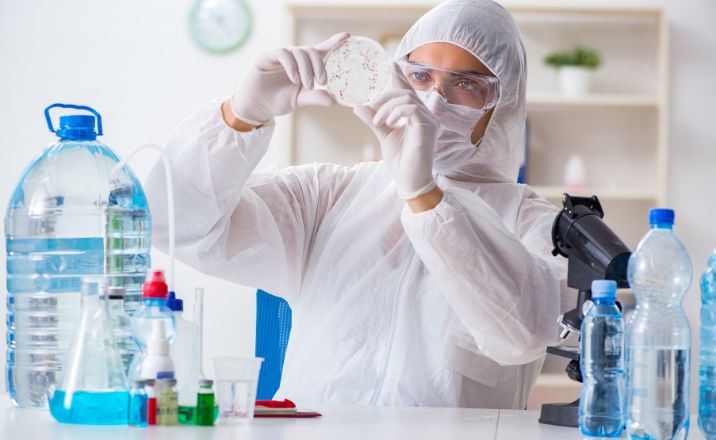
Professional water testing services in NYC are the most reliable way to uncover what’s truly hiding in your tap water. These services help detect dangerous contaminants with scientific precision, giving homeowners accurate data that their senses alone could never provide. Water is the lifeblood of our homes, yet it is a substance we rarely see for what it truly contains. When we turn on the tap, we expect clarity, safety, and health. However, because many contaminants — such as lead, arsenic, PFAS, and various bacteria — are colorless, odorless, and tasteless, we cannot rely on our senses to determine water quality. This is where professional water testing laboratories become essential. But what actually happens behind the scenes when you submit a sample? How do scientists ensure that the results you receive are not just estimates, but precise measurements of your water’s composition? Understanding the rigorous scientific methods used in water testing can provide peace of mind and help you make informed decisions about your home’s water filtration needs.
The Foundation of Accuracy: Quality Assurance and Standards
Before discussing specific chemical or biological tests, it is vital to understand the regulatory framework that governs high-quality labs. In the United States, the Environmental Protection Agency (EPA) sets the National Primary Drinking Water Regulations. Reputable labs do not simply “check” water; they follow established methods approved by the EPA, the American Public Health Association (APHA), and other certifying bodies.
Accuracy begins with a concept called “Method Detection Limits” (MDL). A lab must prove, through rigorous validation, that their equipment can reliably detect a specific contaminant at levels far below those deemed hazardous by health standards. This involves stringent protocols for sample collection, transportation, and laboratory processing. If you are looking for local water testing to ensure your home supply is safe, choosing a certified laboratory is the most important step you can take.
Analytical Chemistry: Uncovering Invisible Contaminants
To detect trace amounts of heavy metals or synthetic chemicals, laboratories employ advanced analytical chemistry techniques. These methods are designed to isolate specific molecules from the complex matrix that is water.
1. Inductively Coupled Plasma Mass Spectrometry (ICP-MS)
ICP-MS is the gold standard for detecting metallic elements such as lead, copper, arsenic, and mercury. The process is fascinatingly complex. A liquid water sample is introduced into an extremely hot plasma torch (reaching temperatures of up to 10,000 Kelvin). This heat vaporizes the sample and breaks it down into individual atoms, which are then ionized.
These ions are accelerated into a mass spectrometer, which separates them based on their mass-to-charge ratio. Because every element has a unique atomic weight, the lab can identify and quantify even microscopic traces of heavy metals. This method is incredibly sensitive, allowing labs to measure concentrations at parts per billion (ppb) levels, which is vital when monitoring for toxic heavy metals.
2. Gas Chromatography-Mass Spectrometry (GC-MS)
When labs test for organic compounds—such as pesticides, herbicides, solvents, or volatile organic compounds (VOCs)—they use Gas Chromatography-Mass Spectrometry. Water is often contaminated by industrial runoff or agricultural chemicals that do not behave like metals.
In this method, the water sample is vaporized and passed through a long, thin column. Different compounds travel through this column at different speeds based on their chemical properties. As they exit the column, they are hit by an electron beam, causing them to break into fragments. The mass spectrometer records these fragments, creating a unique “fingerprint” for every chemical present. This allows scientists to identify complex organic contaminants that might be impacting your water quality without any noticeable change in taste.
Microbiological Analysis: Detecting Pathogens
While chemistry deals with molecules, microbiology deals with life. Testing for bacteria like E. coli or Coliform is a critical component of water safety, particularly for those using private wells.
Membrane Filtration
The most common and accurate method for testing bacteria is the membrane filtration technique. A known volume of water is passed through a sterile filter with microscopic pores. These pores are small enough to trap bacteria but allow water to pass through.
The filter is then placed on a culture medium (a nutrient-rich “food” for bacteria) and incubated at a specific temperature. Over 24 to 48 hours, any bacteria trapped on the filter will grow into visible colonies. Scientists then count these colonies to determine the presence and density of pathogens. This method is preferred because it allows for the analysis of large water volumes, ensuring that even low concentrations of bacteria are captured and identified.
Enzyme Substrate Tests
In recent years, enzyme substrate tests have become popular due to their speed and specificity. These tests use chemicals that react with enzymes produced by specific bacteria. If E. coli is present, the enzymes react with the test media to produce a color change or fluorescence under ultraviolet light. It is a highly reliable, EPA-approved method that provides clear “yes/no” results for presence/absence testing.
Why Professional Lab Testing Outperforms DIY Kits
With the rise of internet marketplaces, many homeowners are tempted by inexpensive, DIY test strips. While these kits can provide a fun educational experience or a very rough “ballpark” figure for pH or water hardness, they lack the sensitivity, calibration, and scientific rigor of a certified lab.
A DIY strip cannot detect lead at the 15 ppb action level set by the EPA with any degree of reliability. Furthermore, DIY kits are prone to interference from other minerals in the water, which can lead to “false positives” or, more dangerously, “false negatives.”
Professional water testing labs utilize calibrated, state-of-the-art instruments that are serviced and recalibrated regularly. Furthermore, the personnel performing these tests are trained to handle samples to prevent cross-contamination—a common pitfall that can ruin amateur testing attempts. When you invest in a professional test, you are paying for the integrity of the process, from the controlled environment of the lab to the expert interpretation of the results.
Understanding Your Results
Once the lab completes these high-precision tests, they provide a report. For the average homeowner, these reports can look like a maze of acronyms and units of measure.
- MCL (Maximum Contaminant Level): The highest level of a contaminant that is allowed in drinking water.
- ppb (Parts Per Billion): The equivalent of one drop of water in an Olympic-sized swimming pool.
- AL (Action Level): The concentration of a contaminant which, if exceeded, triggers treatment or other requirements.
If your report indicates that a contaminant is approaching or exceeding these levels, it is not necessarily a cause for immediate panic, but it is a signal to act. Whether it is installing a point-of-use reverse osmosis system or a whole-house filtration unit, professional lab results provide the necessary data to choose the right solution for your specific water concerns.
The Importance of Routine Testing
One common misconception is that “the city tests my water, so I don’t have to.” While municipal water systems are required to test their water at the source and in the distribution system, they cannot control what happens once the water enters your home’s private plumbing. Aging pipes, lead solder, and corrosion can introduce contaminants that weren’t there when the water left the treatment plant.
For private well owners, the responsibility is even greater. The EPA recommends that private well owners test their water at least annually for bacteria, nitrates, and any other contaminants of local concern.
Final Thoughts
The safety of your drinking water is not something to leave to chance. By utilizing sophisticated methods like ICP-MS, GC-MS, and membrane filtration, water testing laboratories act as the final line of defense between complex environmental factors and the health of your family.
If you have questions about your water quality or are looking to schedule a test, we invite you to browse our frequently asked questions or contact our team for guidance. Whether you are in a rural area or the heart of the city, knowing exactly what is in your water is the first step toward true peace of mind. By taking a proactive approach today, you ensure a safer, healthier tomorrow for your household.